ASTM vs GB Steel Grades: Complete Comparison for Steel Structures
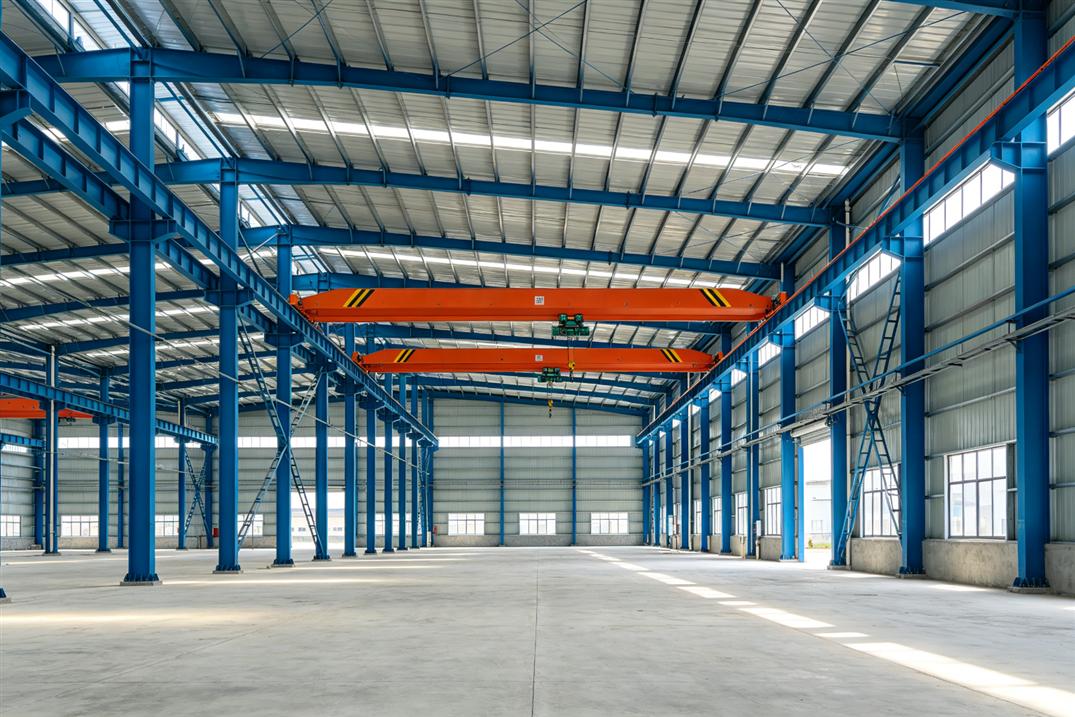
Steel grade selection is a fundamental decision that impacts structural safety, cost, weight, and compliance with local building codes. When sourcing from China, you will encounter GB (Chinese National Standard) steel grades, while many international projects specify ASTM (American Society for Testing and Materials) grades. This guide explains the differences, equivalents, and how to choose the right grade for your project.
Understanding Steel Grade Standards
Different countries and regions have developed their own steel standards, each with unique designation systems, testing requirements, and quality specifications.
Major Structural Steel Standards: • ASTM (USA): A36, A572, A992, A514 - widely used in North America • GB (China): Q235, Q355, Q390, Q420, Q460 - dominant in China and many export markets • EN (Europe): S235, S275, S355, S460 - used in EU and many African countries • JIS (Japan): SS400, SM490, SM570 - used in Japan and some Asian markets • AS/NZS (Australia/NZ): 250, 300, 350, 410 - used in Australia and New Zealand
What Steel Grade Designations Mean: • ASTM A36: "A" = ferrous material, "36" = 36,000 psi minimum yield strength • GB Q235B: "Q" = 屈服强度 (yield strength), "235" = 235 MPa minimum yield, "B" = quality grade (impact test at 20°C) • EN S355JR: "S" = structural steel, "355" = 355 MPa yield, "JR" = impact test at room temperature
Key Mechanical Properties: • Yield strength (Fy): Stress at which material permanently deforms • Tensile strength (Fu): Maximum stress before failure • Elongation: Ductility measure (ability to deform without breaking) • Impact toughness: Resistance to fracture at low temperatures • Carbon equivalent (CE): Weldability indicator
Understanding these properties helps you evaluate whether a "equivalent" grade is truly suitable for your application, or if adjustments are needed.
ASTM A36 vs GB Q235B: The Most Common Structural Grades
A36 and Q235B are the most widely used mild structural steels in their respective markets. While often considered equivalents, there are important differences.
Chemical Composition Comparison (%): | Element | ASTM A36 | GB Q235B | |---------|----------|----------| | Carbon (C) | ≤0.25 | ≤0.20 | | Manganese (Mn) | ≤1.03 | ≤1.40 | | Silicon (Si) | ≤0.40 | ≤0.35 | | Sulfur (S) | ≤0.05 | ≤0.045 | | Phosphorus (P) | ≤0.04 | ≤0.045 |
Mechanical Properties Comparison: | Property | ASTM A36 | GB Q235B | |----------|----------|----------| | Yield strength | 250 MPa (36 ksi) | 235 MPa | | Tensile strength | 400-550 MPa | 375-500 MPa | | Elongation | ≥20% | ≥26% | | Impact test | Optional | 20°C (Grade B) |
Key Differences: 1. Yield Strength: A36 (250 MPa) is slightly stronger than Q235B (235 MPa) - about 6% difference 2. Ductility: Q235B has higher elongation (26% vs 20%), meaning it is more ductile 3. Weldability: Both have excellent weldability, Q235B slightly better due to lower carbon 4. Availability: Q235B is universally available in China, A36 may require special ordering 5. Cost: Q235B is typically 5-10% cheaper than A36 when sourced from China
Can Q235B Replace A36? In most applications, yes. The 6% yield strength difference is usually accounted for in design safety factors. However: • For projects strictly requiring A36 certification, specify A36 or request Q235B with A36-equivalent test reports • Some building departments may require A36 specifically - verify before ordering • For critical applications, request material test reports to verify actual properties • Q235B is accepted by most international codes when properties are verified
Practical Recommendation: For most warehouse, workshop, and commercial building projects, Q235B is a cost-effective, technically suitable alternative to A36. Specify Q235B for secondary members and Q355B for primary members to optimize cost and performance.
ASTM A572 Grade 50 vs GB Q355B: High-Strength Structural Steel
High-strength steels offer significant weight savings and cost optimization. A572 Grade 50 and Q355B are the workhorses of modern steel construction.
Chemical Composition Comparison (%): | Element | ASTM A572 Gr 50 | GB Q355B | |---------|-------------------|----------| | Carbon (C) | ≤0.23 | ≤0.20 | | Manganese (Mn) | ≤1.35 | ≤1.60 | | Silicon (Si) | ≤0.40 | ≤0.55 | | Niobium (Nb) | 0.005-0.05 | ≤0.07 | | Vanadium (V) | 0.01-0.15 | ≤0.15 | | Sulfur (S) | ≤0.05 | ≤0.045 | | Phosphorus (P) | ≤0.04 | ≤0.045 |
Mechanical Properties Comparison: | Property | ASTM A572 Gr 50 | GB Q355B | |----------|-------------------|----------| | Yield strength | 345 MPa (50 ksi) | 355 MPa | | Tensile strength | 450-600 MPa | 470-630 MPa | | Elongation | ≥18% | ≥22% | | Impact test | Optional | 20°C (Grade B) |
Key Differences: 1. Yield Strength: Q355B (355 MPa) is slightly stronger than A572 Gr 50 (345 MPa) - about 3% difference 2. Microalloying: Both use Nb/V microalloying for strength, Q355B allows slightly higher Mn 3. Ductility: Q355B has better elongation (22% vs 18%) 4. Weldability: Both excellent, carbon equivalent typically 0.35-0.45% 5. Cost: Q355B costs 10-15% more than Q235B but saves 15-20% in steel weight
Weight Savings with High-Strength Steel: Using Q355B instead of Q235B typically reduces total steel weight by 15-20%: • A 1,000 m² warehouse: Q235B = 80 tons, Q355B = 65 tons (15 tons saved) • Cost comparison: Q235B at $650/ton = $52,000; Q355B at $720/ton = $46,800 • Net savings: $5,200 (10%) plus reduced shipping and foundation costs
When to Use High-Strength Steel: • Large spans (24m+): Reduces beam weight significantly • Multi-story buildings: Reduces column sizes, increases usable floor area • Heavy crane buildings: Required for crane runway beams • Seismic zones: Better strength-to-weight ratio improves seismic performance • Projects where shipping cost is high: Lighter steel = fewer containers
Can Q355B Replace A572 Gr 50? Yes, in virtually all applications. The 3% strength difference is negligible, and Q355B often exceeds A572 Gr 50 requirements. Q355B is widely accepted by AISC, Eurocode, and most international building codes when proper documentation is provided.
Practical Recommendation: For all primary structural members (columns, main beams, crane girders), specify Q355B. Use Q235B for secondary members (purlins, girts, bracing). This combination optimizes cost, weight, and performance for most projects.
Frequently Asked Questions
Can I mix ASTM and GB steel grades in one project?
Yes, this is common practice. Many projects use Q355B for primary members and Q235B for secondary members, regardless of which standard the project specifies. The key is ensuring each member meets the required mechanical properties for its application. Provide clear material specifications in your drawings and purchase orders.
Do I need to order ASTM-certified steel, or is GB acceptable?
GB steel is acceptable for most international projects when proper documentation (mill test reports, inspection certificates) is provided. However, some projects specifically require ASTM certification due to: local building code requirements, client/insurance requirements, or engineering firm specifications. If ASTM is required, Chinese mills can produce ASTM-certified steel at a 5-15% cost premium. Always verify with your local building department before ordering.
What is the cost difference between Q235B and Q355B?
Q355B typically costs 10-15% more per ton than Q235B. However, because Q355B is stronger, you need 15-20% less steel for the same structural capacity. This results in net savings of 5-10% on material cost, plus additional savings on shipping (fewer containers) and foundations (less weight to support). For most projects, Q355B is the more economical choice despite higher per-ton cost.
How do I verify the steel grade I receive matches the specification?
Verification steps: 1) Request mill test reports (MTR) for every steel batch, which show chemical composition and mechanical properties. 2) Check that MTR heat numbers match markings on the steel. 3) For critical projects, hire a third-party inspector (SGS, BV, TUV) to verify material at the factory before shipping. 4) Upon receipt, verify heat number markings and consider independent testing if any discrepancies are found. Reputable manufacturers provide full traceability documentation.
What steel grade should I use for a poultry house or agricultural building?
For poultry houses and agricultural buildings, Q235B is usually sufficient and most cost-effective. These buildings have lighter loads (no cranes, moderate snow), and Q235B provides adequate strength. For large-span poultry houses (15m+), Q355B may be more economical due to reduced member sizes. The key consideration for agricultural buildings is corrosion protection, not strength - specify galvanized or high-quality paint systems for ammonia-rich environments.
Ready to Get a Quote for Your Steel Structure Project?
Our engineering team provides free quotations within 24-48 hours. Get accurate pricing based on your specific requirements.
Get Free Quote WhatsApp Us