Steel Warehouse Supplier Nigeria: Complete Sourcing Guide
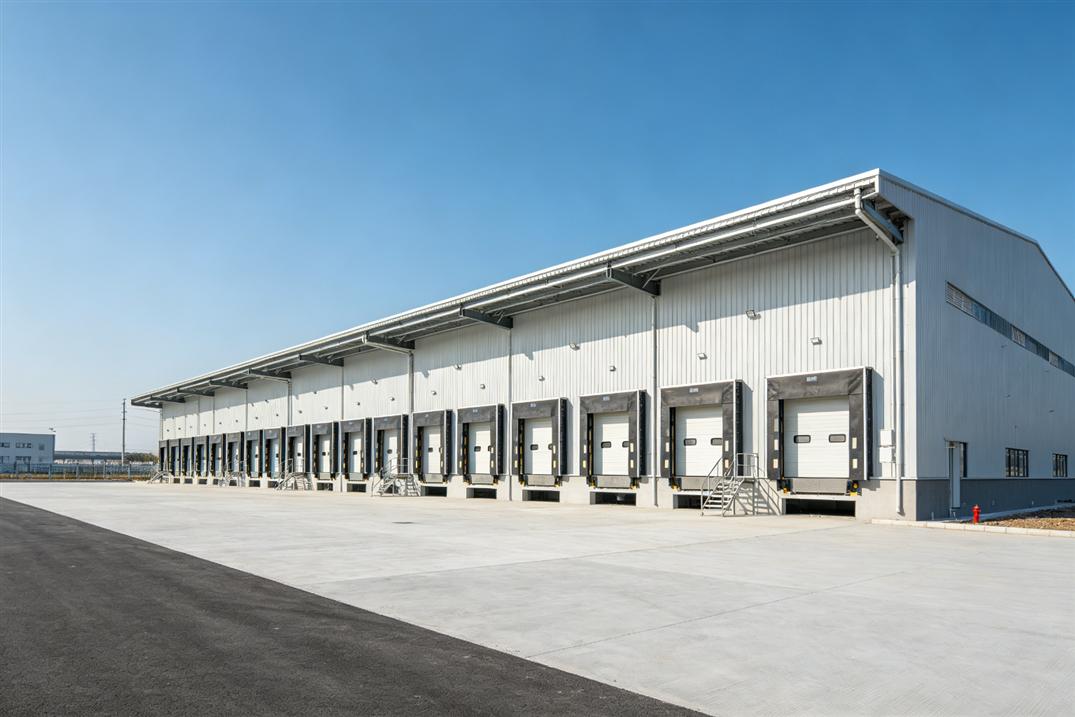
Nigeria is the largest economy in Africa and a major market for steel structure imports. With rapid industrialization, growing demand for warehouses, factories, and agricultural facilities, Nigeria offers significant opportunities for businesses sourcing from China. This guide covers SONCAP certification, import regulations, shipping to Lagos, local building codes, and practical insights for successful procurement.
Nigeria Steel Structure Market Overview
Nigeria is West Africa economic powerhouse, with a population of 220+ million and growing demand for industrial and commercial infrastructure.
Market Drivers: • Rapid population growth and urbanization • Industrialization and manufacturing sector growth • E-commerce boom driving warehouse demand • Agricultural modernization (poultry, livestock, grain storage) • Government infrastructure programs (roads, ports, power) • Foreign direct investment in manufacturing and logistics • Housing deficit (28+ million units) driving construction • Free trade zones (Lekki, Calabar, Kano)
Common Project Types: • Warehouses and logistics centers (Lekki, Ikeja, Apapa) • Manufacturing factories and workshops • Poultry farms and livestock buildings (fastest growing) • Grain storage and agricultural facilities • Cold storage and food processing plants • Commercial buildings and showrooms • Religious buildings (churches, mosques) • Schools and educational facilities • Market stalls and commercial complexes
Key Industrial Areas: • Lagos: Commercial capital, Apapa port, Lekki free zone, Ikeja industrial • Ogun State: Manufacturing hub (Sango Otta, Agbara, Ota) • Kano: Northern commercial center, industrial zone • Port Harcourt: Oil & gas, industrial, southern hub • Calabar: Free trade zone, southeastern industrial • Enugu: Eastern commercial center • Abuja: Federal capital, commercial and government • Ibadan: Southwestern industrial and commercial
Why Chinese Steel Structures Are Popular in Nigeria: • Cost savings of 30-50% compared to local or European suppliers • Experience with SONCAP certification and Nigerian import procedures • Fast production (4-6 weeks) to meet project timelines • Ability to handle large and complex projects • Chinese contractors active in Nigeria provide references • Many Nigerian importers have established relationships with Chinese suppliers • Flexible payment terms for established clients
Nigeria market presents both significant opportunities and unique challenges. Understanding the market dynamics and regulatory environment is essential for successful procurement.
SONCAP Certification and Import Regulations
Nigeria has strict import regulations, and SONCAP (Standards Organization of Nigeria Conformity Assessment Program) certification is mandatory for most products.
SONCAP Requirements for Steel Structures: • SONCAP is mandatory for all regulated products imported into Nigeria • Steel structures (HS 7308) are regulated products requiring SONCAP • Two-stage process: Product Certificate (PC) + SONCAP Certificate (SC) • Product Certificate: Valid for 1 year, issued after product testing/evaluation • SONCAP Certificate: Issued per shipment, required for customs clearance
SONCAP Certification Process: 1. Manufacturer applies for Product Certificate (PC) via accredited agent 2. Product documentation submitted (drawings, test reports, MTR) 3. Product testing may be required (physical or document review) 4. PC issued (valid 1 year, cost $300-$800 depending on product) 5. For each shipment: apply for SONCAP Certificate (SC) 6. SC issued after verifying shipment details ($150-$300 per shipment) 7. SC presented to Nigeria Customs for clearance
Import Duty Rates (2026): • Steel structures (HS 7308.90): 10-15% import duty • Steel beams/columns (HS 7216): 10-15% • Sandwich panels (HS 7210): 10-20% • VAT: 7.5% on (CIF + duty) (reduced from 15% in 2020) • Additional levies: 0.5% ITF, 0.2% NSITF, 1% CISS (varies) • ECOWAS Trade Liberalisation Scheme (ETLS) may reduce duties for qualifying goods
Required Import Documents: • Commercial invoice (detailed, with HS codes, in English) • Packing list (weights, dimensions, part numbers) • Bill of Lading (B/L) - must show Nigerian consignee • SONCAP Certificate (SC) - mandatory • Product Certificate (PC) copy • Certificate of Origin (issued by CCPIT) • Material test reports (MTR) for steel products • Manufacturer declaration • Form M (import declaration form - obtained from Nigerian bank) • PAAR (Pre-Arrival Assessment Report) - issued by customs
Customs Clearance Process: 1. Importer obtains Form M from Nigerian bank (before shipment) 2. Submit documents to customs for PAAR processing 3. PAAR issued (assesses duty payable) 4. Pay duties, VAT, and levies 5. SONCAP certificate verification 6. Customs physical inspection (most shipments are inspected) 7. Release for inland transport 8. Typical clearance: 7-14 working days (can be longer with complications)
Common Issues to Avoid: • Missing SONCAP certificate (biggest cause of delays and seizures) • Incorrect HS codes (duty reassessment and penalties) • Incomplete or missing Form M (cannot clear without it) • Undervaluation (customs may revalue, causing delays and fines) • Wood packaging without ISPM 15 treatment (fumigation required) • Inaccurate packing lists (delays inspection) • Unregulated product classifications (ensure product is correctly categorized) • Corruption and informal payments (use reputable brokers to minimize)
Recommended Approach: • Work with manufacturer experienced in Nigerian exports (already SONCAP registered) • Confirm SONCAP costs are included in quotation (PC + SC) • Use experienced Nigerian customs broker (essential for smooth clearance) • Apply for Form M before shipment leaves China • Verify all documents before shipment • Allow extra time for customs clearance (7-14 days minimum) • Budget for potential additional costs (inspection, storage, demurrage)
SONCAP certification and Nigerian customs procedures are the most challenging aspects of importing to Nigeria. Working with experienced suppliers and brokers significantly reduces risks and delays.
Shipping and Logistics to Nigeria
Nigeria has several ports, with Apapa (Lagos) being the primary port for general cargo. Port congestion and infrastructure challenges require careful planning.
Major Nigerian Ports: • Apapa Port (Lagos): Largest port, handles most general cargo, often congested • Tin Can Island Port (Lagos): Second port in Lagos area, handles general and bulk cargo • Onne Port (Port Harcourt): Oil & gas and general cargo, less congested • Calabar Port: Southeastern port, free trade zone • Warri Port: Delta state, oil & gas, limited general cargo • Lekki Deep Sea Port: Newest port (opened 2023), modern, less congested
Shipping Routes and Transit Times: • China (Shenzhen/Guangzhou) → Apapa (Lagos): 30-40 days (direct or via transshipment) • China → Tin Can Island: 30-40 days • China → Onne (Port Harcourt): 32-42 days • China → Calabar: 35-45 days (may transship) • Note: Many services transship via Singapore, Durban, or Abidjan, adding 5-10 days
2026 Freight Rates (40HQ container): • Shenzhen → Apapa (Lagos): $3,500-$5,200 • Guangzhou → Apapa: $3,600-$5,300 • Shanghai → Apapa: $3,800-$5,500 • Shenzhen → Onne (Port Harcourt): $3,800-$5,500 • Shenzhen → Tin Can Island: $3,500-$5,200 • Note: Rates fluctuate based on port congestion, fuel costs, and shipping line capacity
Inland Transport (Port to Site): • Apapa → Lagos mainland (Ikeja, Lekki): $300-$600 per truck (traffic dependent) • Apapa → Ogun State (Sango Otta, Agbara): $400-$700 • Apapa → Ibadan: $500-$800 (150km) • Apapa → Abuja: $1,200-$2,000 (700km) • Onne → Port Harcourt: $200-$400 • Onne → Aba: $400-$700 • Note: Nigerian roads vary in quality; Apapa traffic can add hours to transport
Special Considerations for Nigeria: • Port congestion: Apapa port is frequently congested; expect 3-7 day waiting time for berthing • Demurrage charges: Shipping lines charge $50-$150/day per container after free days (typically 7-14 days) • Storage charges: Ports charge storage after 3-7 free days • Security: Ensure secure transport and storage; consider escort for high-value shipments • Road condition: Major highways are generally good, but rural roads may be poor • Fuel availability: Diesel is generally available but prices fluctuate • Rainy season: April-October; heavy rains can delay transport and site work • Power supply: Grid power is unreliable; ensure installation team has backup generator
Recommended Logistics Tips: 1. Choose port wisely: Lekki Deep Sea Port is newer and less congested; consider for large projects 2. Plan for port delays: Budget 1-2 weeks extra for Apapa congestion 3. Use experienced forwarder: Choose forwarder with Nigeria experience and good port relationships 4. Minimize demurrage: Ensure Form M and SONCAP are ready before ship arrives 5. Pre-clear customs: Start customs clearance process before shipment arrives 6. Arrange transport in advance: Book trucks before container is released 7. Insure shipment: Marine cargo insurance is essential for Nigeria route 8. Consider Onne for eastern projects: Less congested than Apapa, closer to southeast
Nigerian logistics require patience and careful planning due to port congestion and infrastructure challenges. Working with experienced partners and allowing ample time minimizes risks and additional costs.
Frequently Asked Questions
What is the total cost to import a steel warehouse from China to Nigeria?
For a standard 1,000 m² steel warehouse: FOB China $70,000-$100,000, shipping $14,000-$20,000 (4 containers to Apapa), SONCAP certification $500-$1,200 (PC + SC), import duty 10-15% ($7,000-$15,000), VAT 7.5% ($6,000-$9,000), other levies $1,000-$2,000, inland transport $1,000-$3,000, customs broker $500-$1,500, potential demurrage/storage $500-$3,000. Total landed cost approximately $100,500-$154,700. Add foundation ($15,000-$30,000) and installation ($10,000-$25,000) for total project cost.
Is SONCAP certification mandatory for steel structures?
Yes, SONCAP (Standards Organization of Nigeria Conformity Assessment Program) certification is mandatory for most regulated products imported into Nigeria, including steel structures. Without a valid SONCAP Certificate (SC), Nigeria Customs will not clear the shipment, and you may face fines, storage charges, demurrage, or even seizure/re-export of the goods. The process involves two stages: Product Certificate (PC, valid 1 year) and per-shipment SONCAP Certificate (SC). Always confirm that your Chinese supplier is SONCAP-registered and includes both PC and SC costs in their quotation.
How long does delivery take from China to Nigeria?
Total timeline from order to site delivery: Production 4-6 weeks, SONCAP certification 1-2 weeks (can overlap), shipping 30-40 days (Apapa), port congestion 3-7 days, customs clearance 7-14 days, inland transport 2-7 days. Total is typically 10-14 weeks from order confirmation to materials on site. This is longer than Middle East (8-12 weeks) or Southeast Asia (6-9 weeks) due to longer shipping distance and port congestion. Plan carefully and allow buffer time for potential delays.
What local building codes apply in Nigeria?
Nigeria uses Nigerian Building Code (NBC) which is largely based on British and American standards. Key standards include: BS 5950 (structural steel, being replaced by Eurocode 3), BS EN 1993 (Eurocode 3 for steel design), BS 6399 (loads, being replaced by Eurocode 1), ASCE 7 (often referenced for wind loads), Nigerian Industrial Standard (NIS) for materials. Wind loads are critical (southern coast exposure), and seismic design is required for certain regions. For permit approval, you will need a registered Nigerian structural engineer (COREN registered) to review and stamp drawings. Many Chinese manufacturers familiar with British/Eurocode standards can design accordingly.
Can Chinese manufacturers provide after-sales support in Nigeria?
Yes, reputable manufacturers provide comprehensive after-sales support including: detailed installation drawings and manuals in English, video tutorials, remote technical support via WhatsApp/WeChat/email, and optional engineer dispatch to site for installation guidance ($150-$250/day plus flights and accommodation). Some manufacturers have local agents or partners in Lagos, Abuja, or Port Harcourt who can provide on-site support. For first-time projects, we strongly recommend a 1-2 week engineer visit to train the local installation team and ensure correct assembly, as Nigerian installation teams may have limited experience with prefab steel structures. Ensure the engineer has proper visa (STR) and work permits.
Ready to Get a Quote for Your Steel Structure Project?
Our engineering team provides free quotations within 24-48 hours. Get accurate pricing based on your specific requirements.
Get Free Quote WhatsApp Us